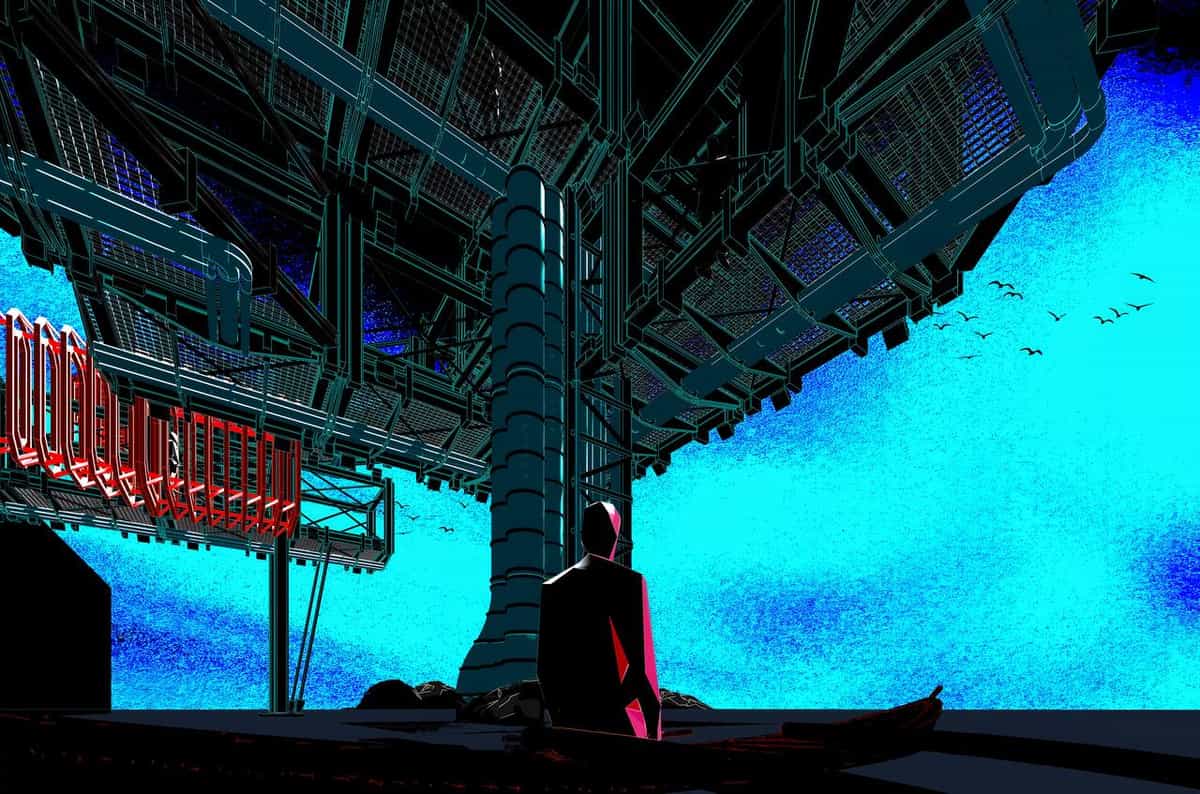
Towards a New Oceania — New Oceania Map
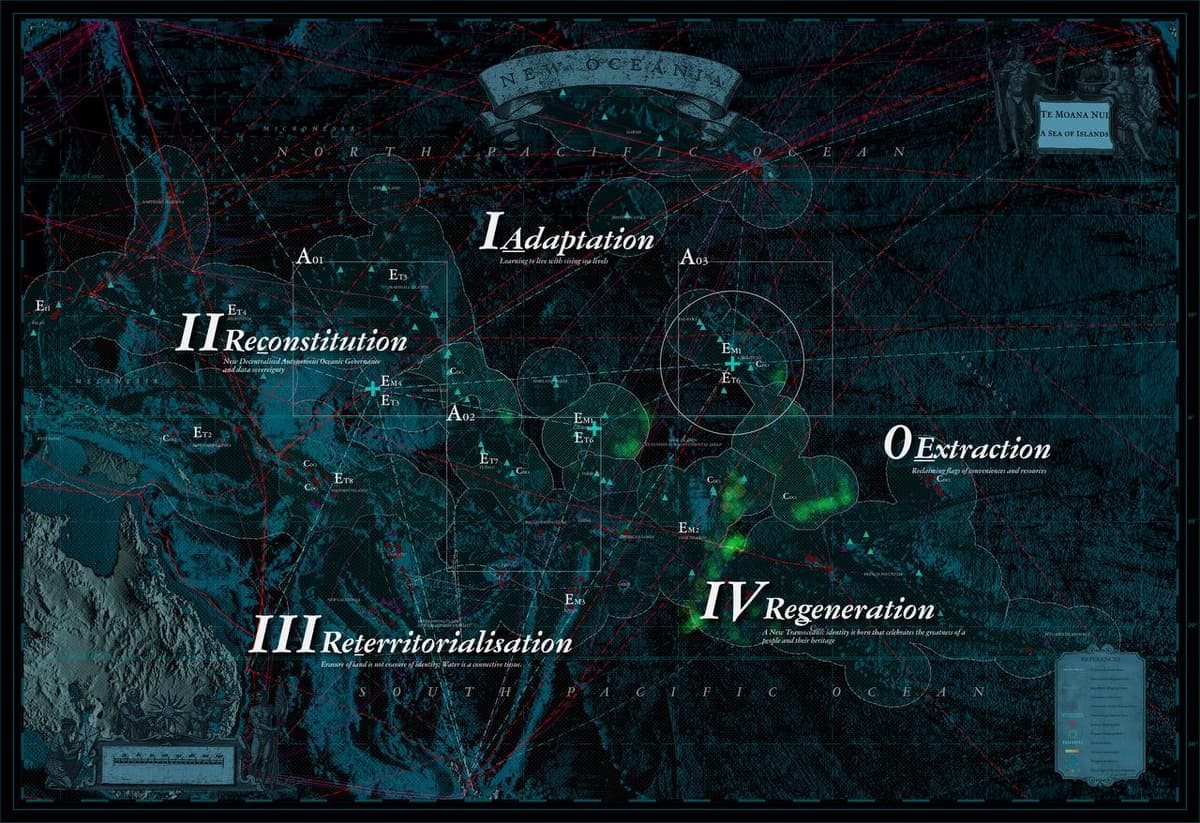
Towards a New Oceania — New Oceania Map
Timeline
2026
Status
Ongoing
Discipline
Tech Stack
Project Narrative
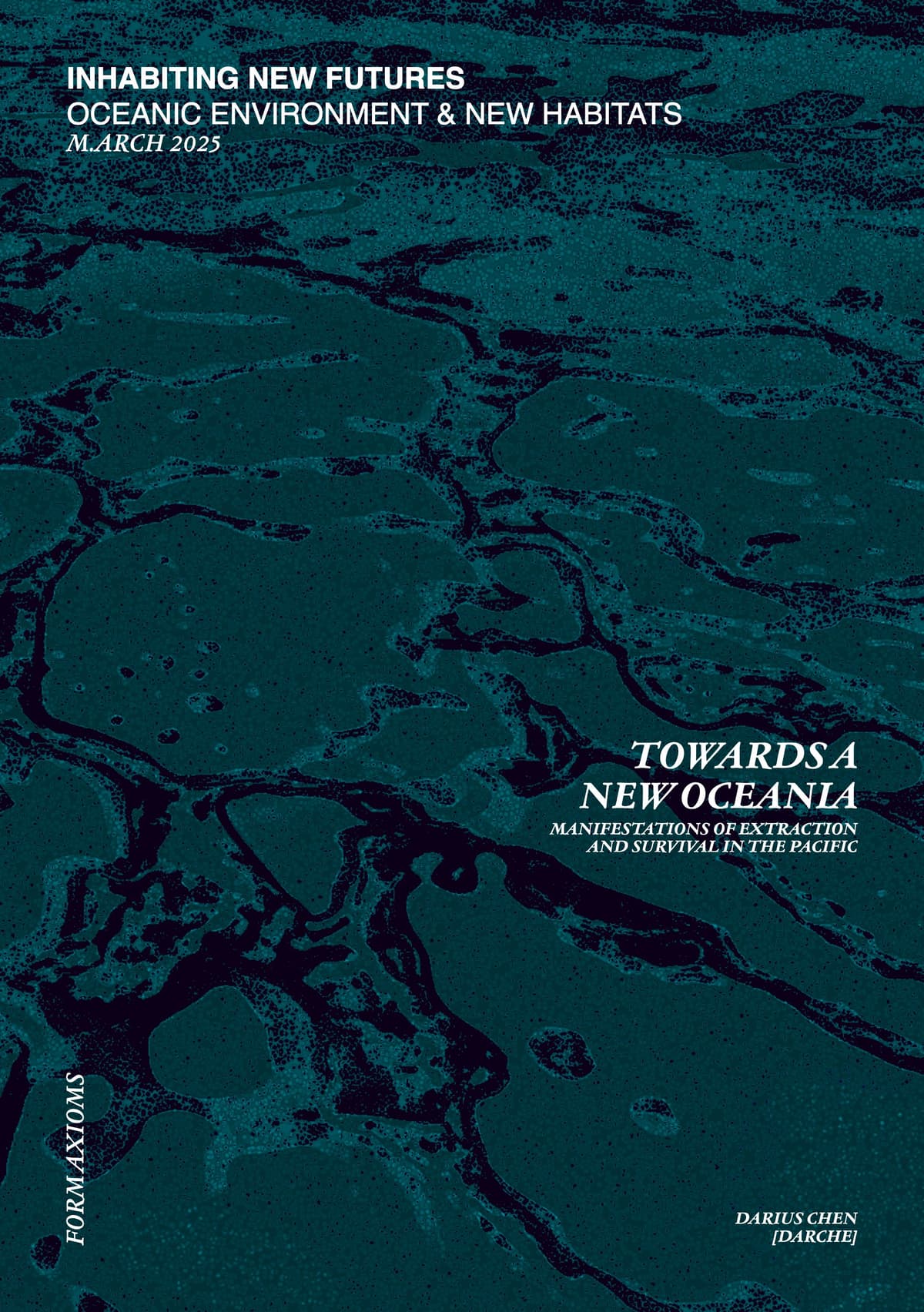
This thesis imagines a New Oceania: a federation of islands and sea reclaiming agency from the extractive architectures of colonial modernity. As Epeli Hau‘ofa wrote, “Oceania is vast, Oceania is expanding, Oceania is hospitable and generous, Oceania is humanity rising from the depths of brine and regions of fire deeper still” (Hau‘ofa 1993). His words recall a region bound not by borders but by shared seas, where governance and survival are inseparable from the ocean itself. Even now, the Pacific is the world’s most aid‑dependent region, caught between generosity and constraint. Tackling climate change and displacement, Pacific Island Nations (PINS) require both capital and technology to endure. But in recent years, Nauru, Kiribati, Tonga, and the Cook Islands have entered extractive partnerships with China and The Metals Company (TMC), gaining small royalties while assuming total legal and ecological risk — a reminder of how dependency reproduces itself. The thesis calls for a moratorium on deep‑sea mining (DSM) in the Clarion‑Clipperton Zone (CCZ), a transnational commons dominated by corporate and state interests, and argues for controlled extraction within Pacific Exclusive Economic Zones (EEZs). In this way, it rejects the capitalist logic that treats rare earth minerals as cheap natures (Moore 2015) and reframes extraction as a reciprocal practice of survival rather than profit. Its agenda unfolds through three acts: dismantling neo‑colonial dependencies, designing extractive frontiers within ecological thresholds, and nurturing profits and reconstituting mineral waste into architecture and infrastructures for habitation, protection, and shared life. This is the call for an Oceanic Pact: sovereignty and economy reassembled from the sea upward.
Key Features
- /1Moratorium framework for deep-sea mining in the CCZ
- /2Sovereignty-first resource governance
- /3Extraction reframed as reciprocal survival
- /4Material reconstitution into architecture and infrastructure