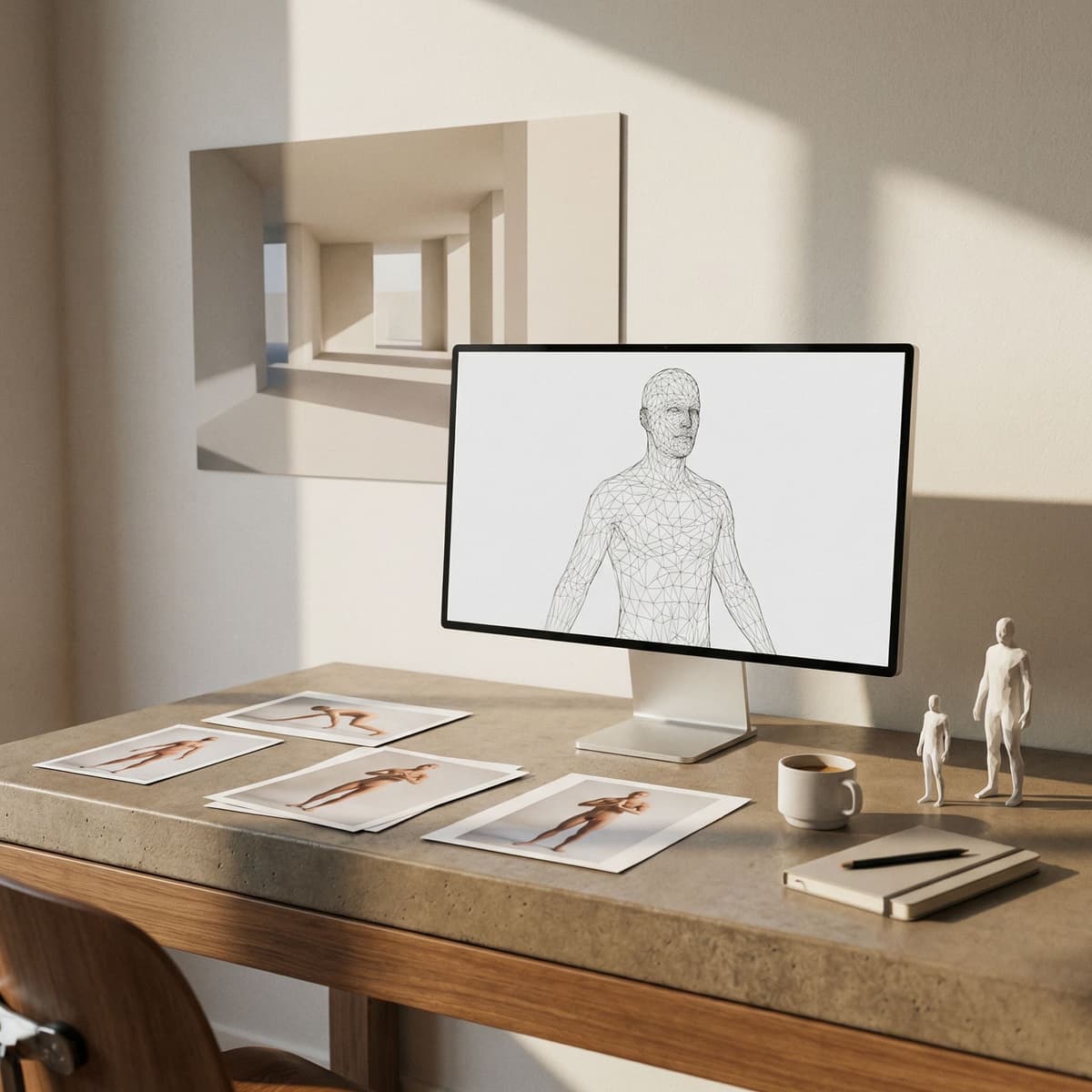
For decades, the intersection of architecture and code has been gated by a formidable barrier: syntax. To build a website, a portfolio, or a generative tool, an architect had to put down the pen and pick up the manual. We were forced to think in loops, arrays, and semicolons.
That era is fading. Vibe coding is the new shortcut for designers. It’s more than a hack—it changes how we sketch in code.
From Syntax to Semantics
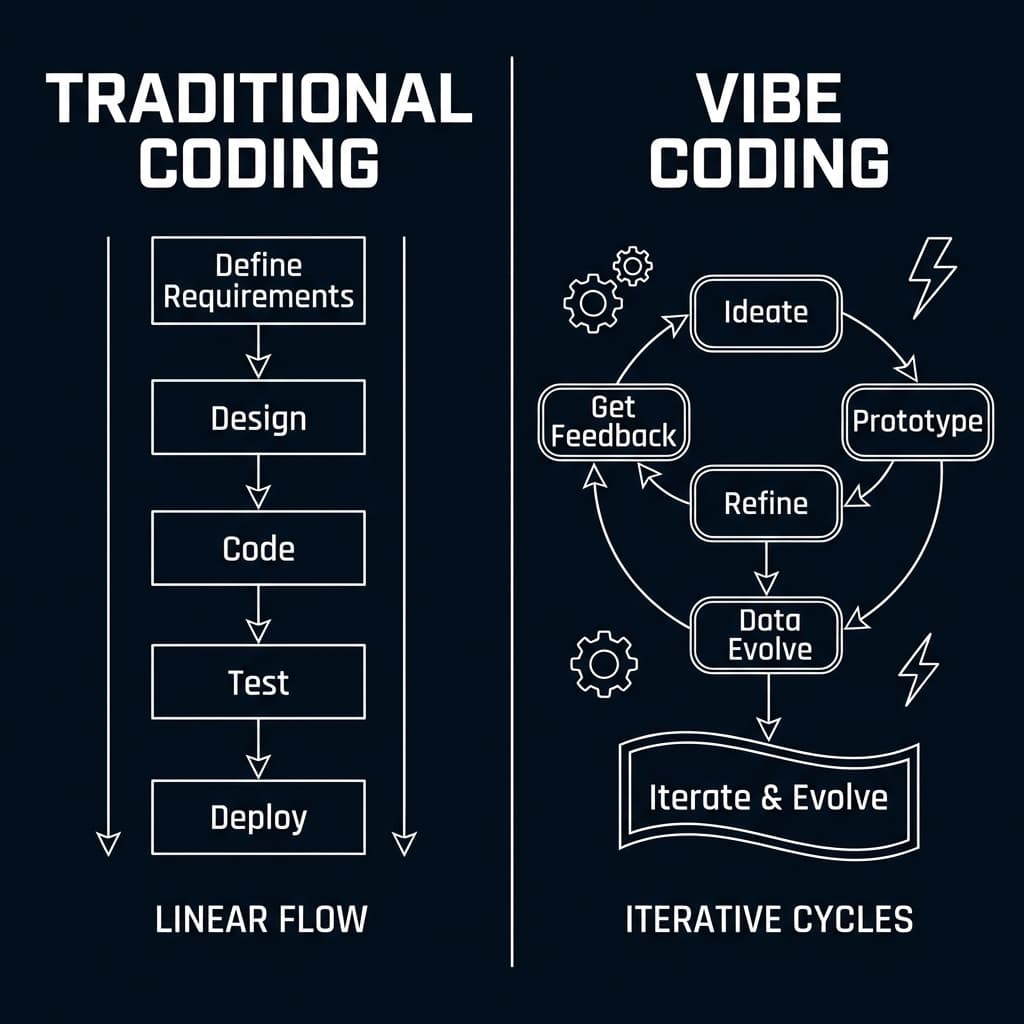
Traditional programming is imperative: you tell the computer how to do something. "Create a div. Give it a width of 100px. Set the background to red." Vibe coding is declarative: you tell the computer what you want, or more importantly, how it should feel.
"Create a card that feels like frosted glass and floats when I hover over it."
For architecture students, this is a profound return to our native skill set. We are trained to describe space, atmosphere, and user experience. We talk about "compression and release," "porosity," and "sequence." Traditionally, these concepts were lost when translating design into a website. Now, Large Language Models (LLMs) allow us to use these semantic descriptions to generate the underlying syntax.
The Iterative Loop
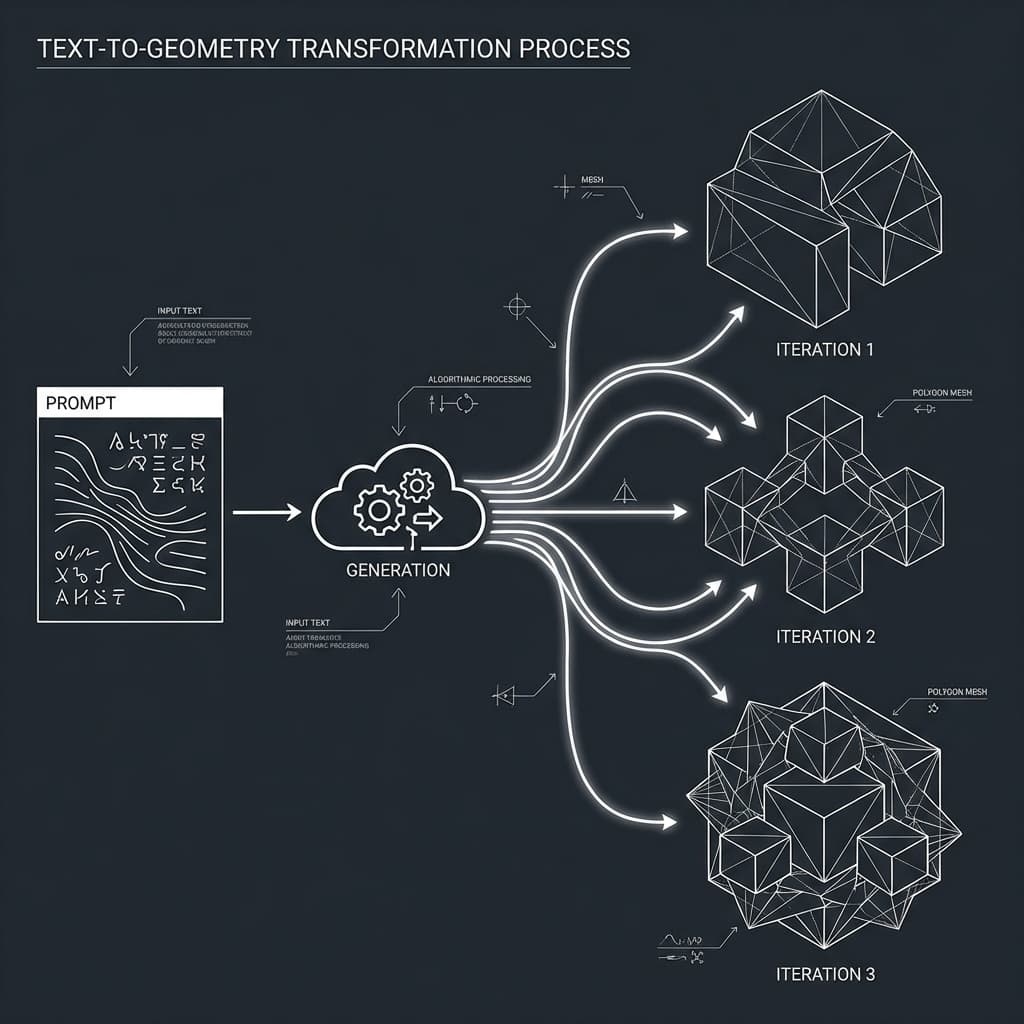
The true power of vibe coding lies in iteration. In a traditional workflow (e.g., writing Python for Rhino), a syntax error stops you cold. The feedback loop is broken by the need to debug.
With AI help, you can reshape code quickly—more like sketching than compiling.
"Make it heavier."
"Too chaotic, organise it into a grid."
"Add a subtle drift animation."
This responsiveness aligns with studio critique. It starts to feel like a quick desk crit with a very literal assistant. The goal is to reach a state of flow where the tool disappears, and you are manipulating the digital material directly through language.
The Technical Reality
It is important to ground this enthusiasm in reality. Vibe coding is not magic. It requires curatorial intelligence. The AI can generate code, but it cannot judge if the code is "good" design.
You still need to understand the material. Just as you need to know that concrete is heavy and glass is brittle, you need to know that a WebGL canvas is expensive on the GPU and distinct from the DOM. You don't need to write the shader code from scratch, but you need to know what a shader is to ask for it effectively.
The skill shifts from "memorizing syntax" to "understanding capability."
Tools of the Trade
The stack for the vibe-coding architect is evolving rapidly.
- 01Cursor: The current gold standard. An IDE that integrates AI directly into the codebase, allowing for "Apply to File" edits that feel like magic.
- 02V0 by Vercel: For rapid UI prototyping. It understands Tailwind CSS and React perfectly, allowing you to generate complex layouts in seconds.
- 03Claude 3.5 Sonnet: The brain behind the operation. Currently, the most "architectural" of the models, with a nuanced understanding of spatial descriptors.
The Architect as Interface Designer
The distinction between physical and digital architecture is blurring. A portfolio website is no longer just a PDF viewer; it is a spatial experience. It has depth, motion, and interactivity.
By embracing vibe coding, architecture students can reclaim the web as a medium for spatial expression. We can build interfaces that breathe, layouts that respond to occupant behaviour, and archives that feel like galleries.
The barrier’s lower now. The limit is how clearly you can describe what you want.