
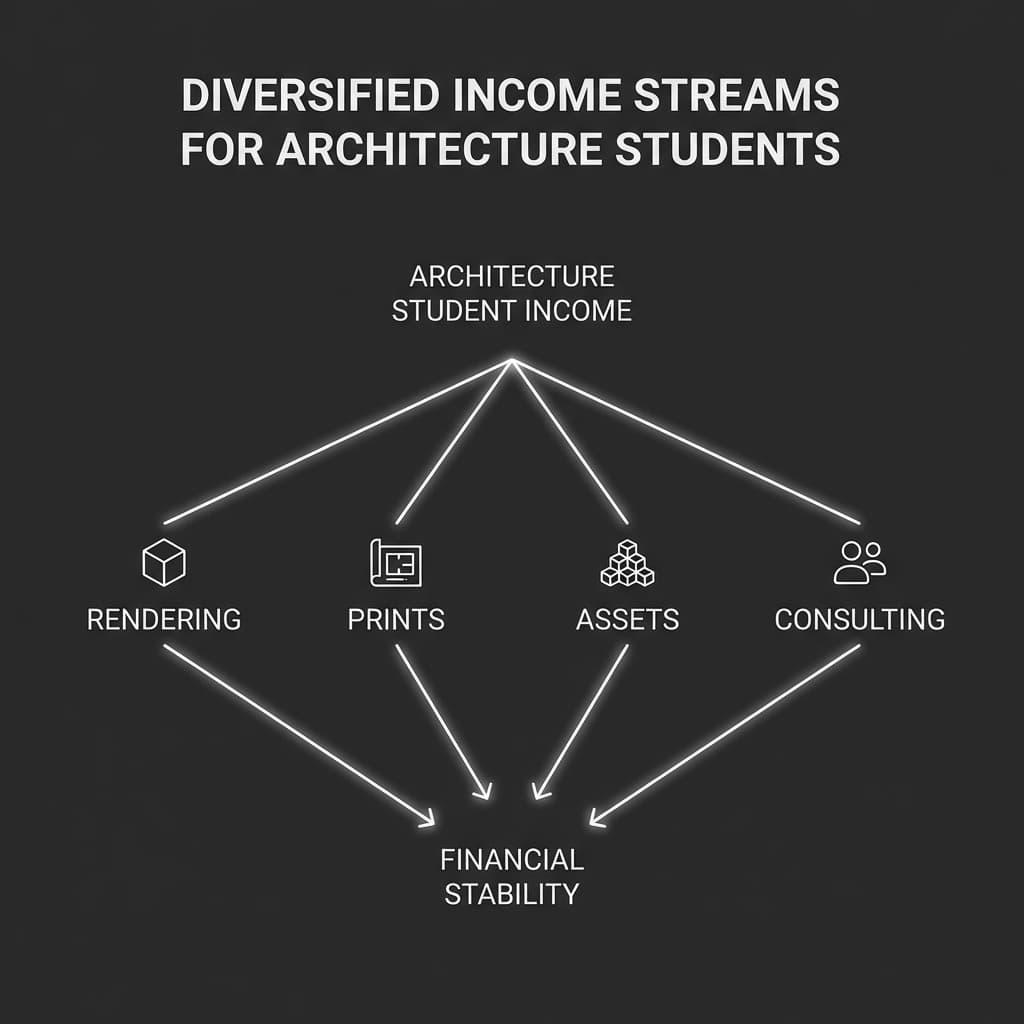
The myth of the starving artist persists in architecture. We are told to suffer for our art, to pull all-nighters, and to accept unpaid internships. But look at your skill stack: 3D modelling, advanced rendering, graphic design, layout, video editing.
These are marketable skills—agencies charge real money for the same work.
Active vs. Passive Income
There are two basic income paths.
Active Income (Service): You trade time for money. "I will render this image for $500." This is the fastest way to cash, but it scales linearly.
Passive Income (Product): You make something once and sell it n-times. "I made a pack of 50 cut-out trees for Photoshop." You sell it for $10. If 1,000 people buy it, you made $10,000 while you slept.
The Pricing Ladder
The biggest mistake students make is undercutting the market. "I'll do it for $50."
When you price low, you attract bad clients who micromanage you. When you price high, you signal quality.
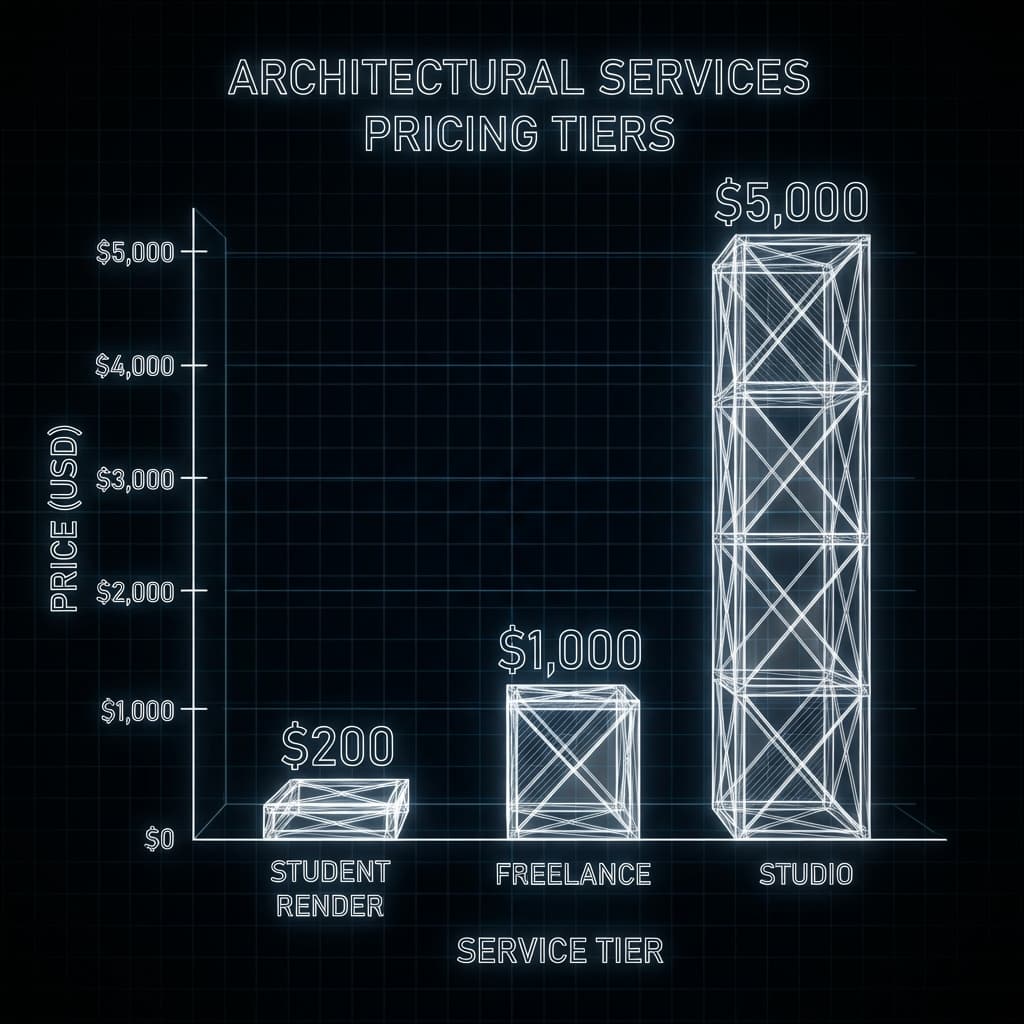
Never charge hourly. Hourly billing punishes efficiency. If you are fast, you get paid less. Charge per deliverable. "One 4K render is $500. Two revisions included. Additional revisions are $100."
The Asset Economy
Look at your hard drive. It is full of "trash" from old projects. Custom textures, specific furniture models, Grasshopper scripts.
Clean them up. Package them. Put them on Gumroad.
- 01Gumroad: Best for digital files (PDFs, scripts, texture packs). Takes a small cut, you own the email list.
- 02TurboSquid / CGTrader: Huge marketplaces for 3D models. High volume, but they take a massive 40-50% cut.
- 03Fiverr: Avoid if possible. Fiverr often pushes prices too low. Upwork is slightly better for professional freelancing.
More stable income gives you more choice
Why does this matter? Because when you are broke, you are desperate. You take bad jobs. You tolerate toxic studios.
When you have $2,000 coming in every month from your asset store and freelance clients, you can say "No." You can choose studios that align with your values, not just who pays the bills.