Curating the Chaos: A Guide to Your First Thesis Book
Every architecture student eventually faces the blank InDesign document. The thesis book is your statement piece. It is the only thing that will survive your final jury. It must look as good as the buildings inside it.
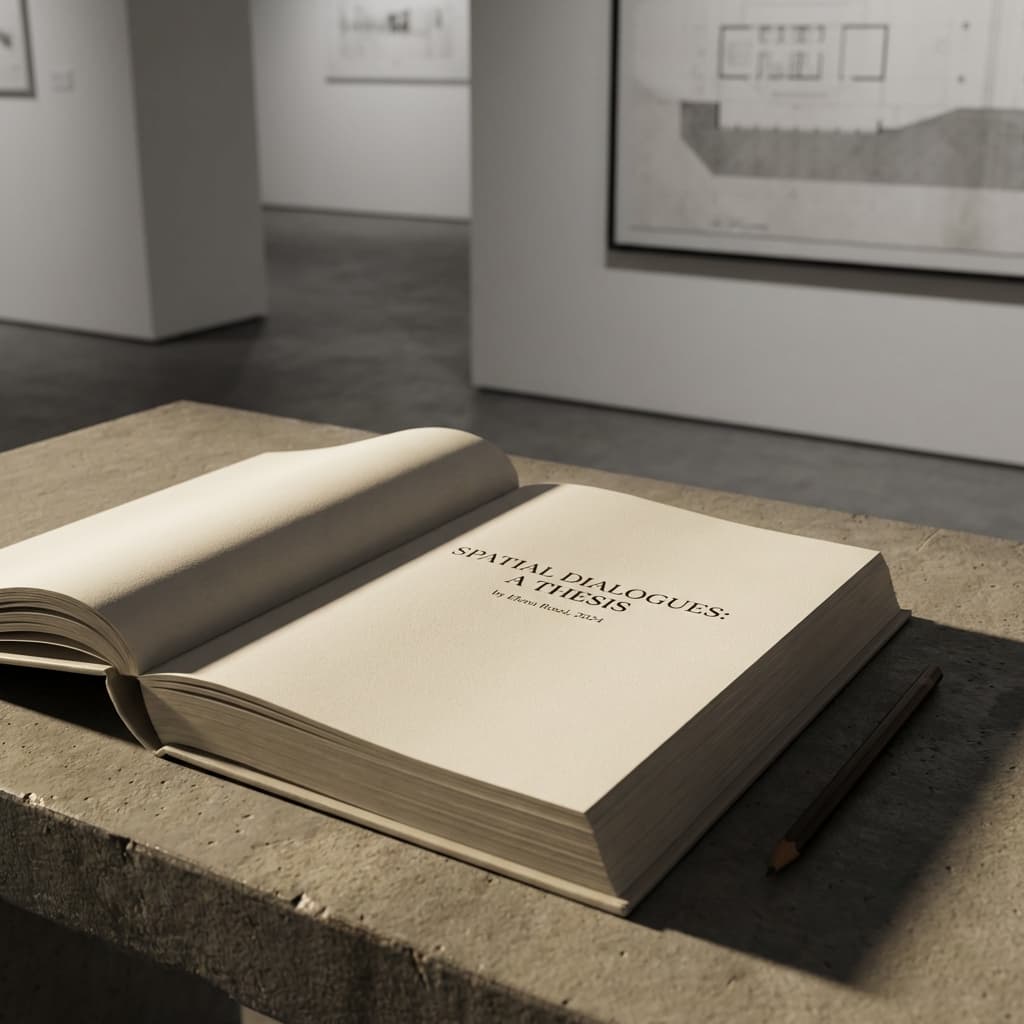
A thesis is not just a project; it is a narrative. The book is the artifact that remains when the models are thrown away. Here is how to structure it using professional editorial standards.
The most common mistake is treating the book as a dump of every render, sketch, and diagram you made over the year. Edit ruthlessly. A book is about rhythm, white space, and pacing.
The Grid System
Before you place a single image, set up your grid. A rigorous grid allows for creative freedom.
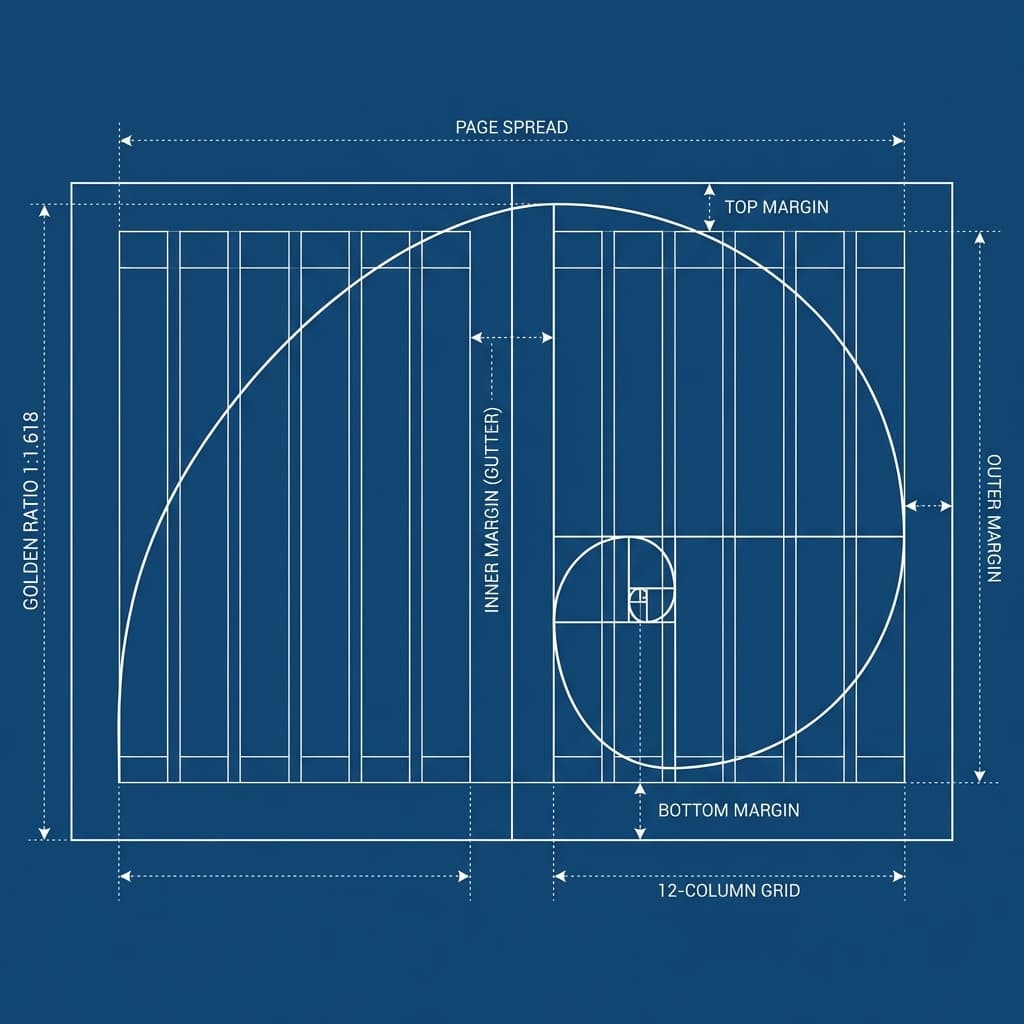
Use a 12-column grid. This offers maximum flexibility (it divides by 2, 3, 4, and 6). Establish your margins early. Generous white space makes your work look expensive. Do not crowd the page.
Typography Rules
Architects are notorious for bad typography. Follow these three rules to stand out:
- Pairings: Pick one serif for body text (Caslon, Garamond, Minion) and one sans-serif for captions (Helvetica, Akzidenz-Grotesk, Univers). Never use more than two families.
- Alignment: Left-align your text. Justified text creates ugly "rivers" of white space unless you are an expert typesetter.
- Leading: Give your text room to breathe. Use a leading (line-height) of at least 1.4x the font size.
The Physical Object
If you are printing this, the physical qualities matter as much as the content.
Paper Weight: Do not use standard 80gsm copy paper. Use at least 120gsm for the text block. It prevents text from showing through to the other side.
Binding: Perfect binding (glue) is standard, but it doesn't lay flat. If you have "spread" images that go across two pages, they will get lost in the gutter.
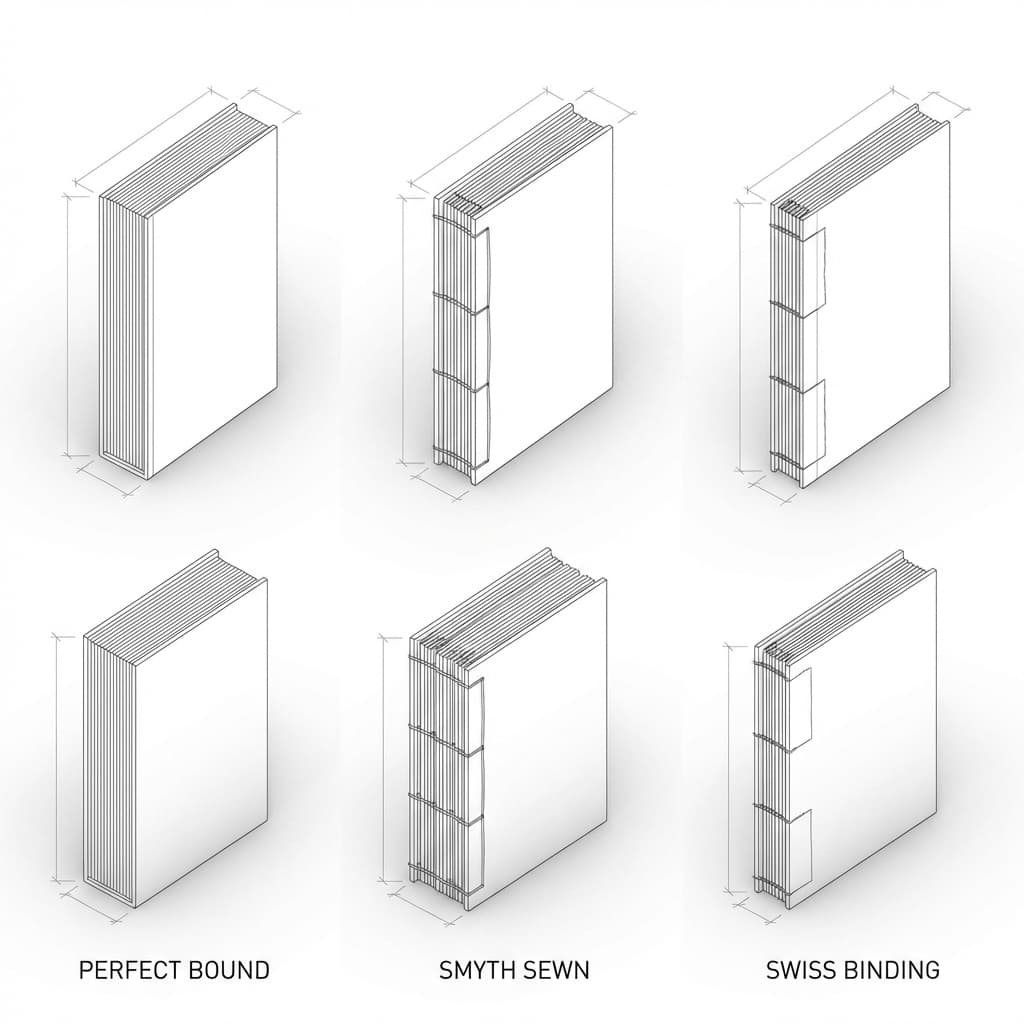
Smyth Sewn or Swiss Binding (open spine) allows the book to lay completely flat. It is more expensive, but for a portfolio or thesis, it is a subtle but impressive choice.
The Narrative Arc
Finally, structure your book like a movie.
- ACT I ::The Setup: The site, the research, the problem. Hook the reader with a question.
- ACT II ::The Process: Sketches, failures, iterations. Show *how* you think.
- ACT III ::The Resolution: The final renders and drawings. The answer to the question.