Deep Dive: AI Tools for Architectural Research
Research used to mean library stacks and manual PDFs. Now, RAG workflows can scan your archive, surface key passages, and cite sources in minutes.

When we talk about AI in architecture, we usually mean image generation. But the text-processing capabilities of Large Language Models (LLMs) are far more transformative for the research phase of a project.
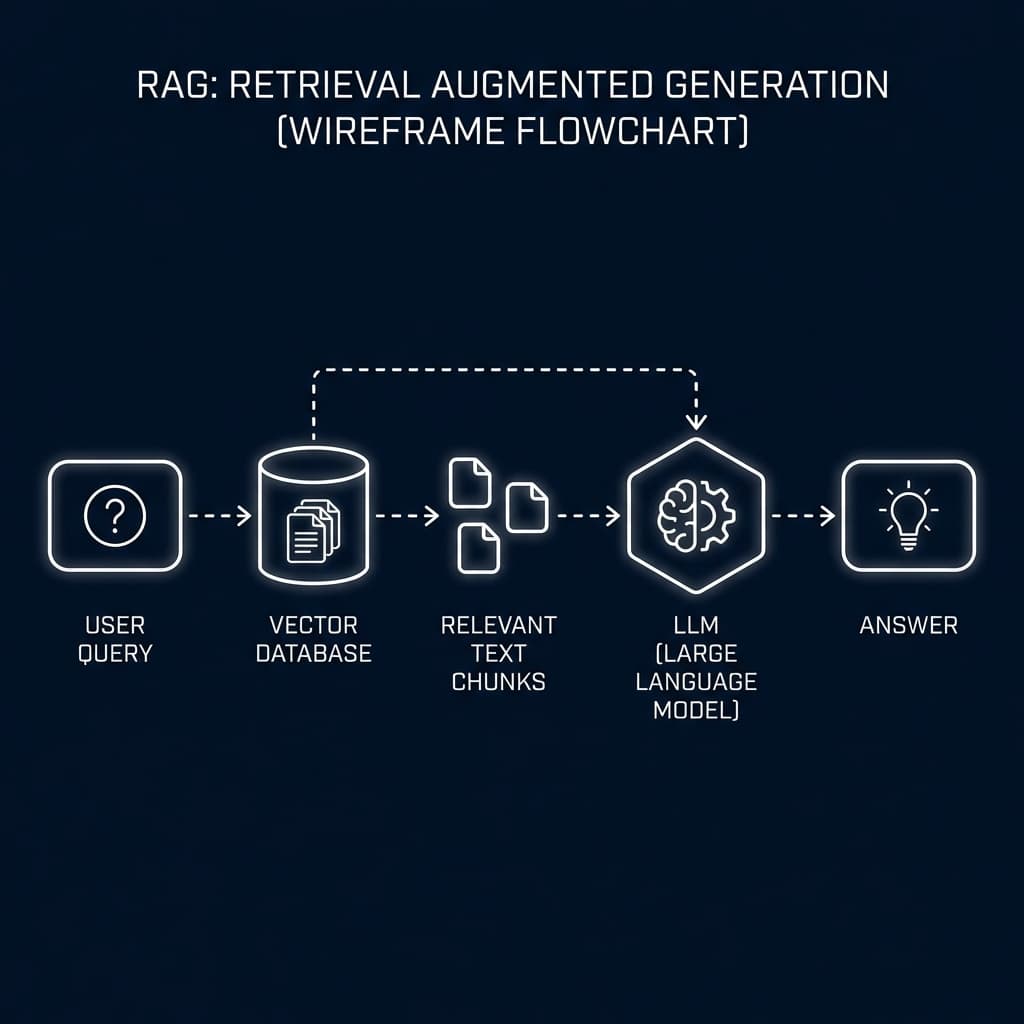
Imagine feeding a PDF of the local zoning code into an agent and asking it, "What are the setback requirements for a commercial lot on 5th street?" and getting an instant, cited answer. This already works with NotebookLM, Perplexity, or a local RAG stack—it’s just retrieval + citations.
Understanding Semantic Search
Traditional search relies on keywords. If you search for "brutalist concrete," you get pages with those exact words.
Semantic search understands concepts. It converts text into mathematical vectors. "Heavy" and "Oppressive" are mathematically close to "Brutalist."
This lets you search by feel—"labyrinthine circulation" or "cellular growth"—and still hit relevant precedents even if those exact words never appear in the source text.
The Thesis Assistant (RAG Pipeline)
For thesis students, the sheer volume of reading is overwhelming. RAG tools allow you to build a "Second Brain."
You upload your bibliography—50 PDFs on urbanism, philosophy, and history. The AI indexes them. You can then "chat" with your entire library.
- "Summarise what Koolhaas and Tschumi say about programme, citing specific pages."
- "Find contradictions between these two authors regarding density."
Tools You Can Use Today
Most of these tools are upload‑and‑ask; no code required.
- 01 ::NotebookLM (Google): Upload up to 50 sources. It generates podcasts, FAQs, and briefing docs instantly. It is arguably the best research tool for students right now.
- 02 ::Perplexity: A search engine that cites its sources. Use it instead of Google for initial queries.
- 03 ::Obsidian + Smart Connections plugin: If you take notes in Obsidian, this plugin allows you to semantically search your own notes.
The Hallucination Danger
A warning: LLMs are confident, even when wrong. They can hallucinate court cases, scientific studies, and historical events.